New York Surrogacy: Laws & Complete Guide


General Surrogacy context in New York
In the New York Surrogacy Guide, SurrogateFirst compiles the latest available information from official sources to answer key questions on
surrogacy laws in New York, including:
- Is surrogacy legal in New York?
- What specific surrogacy requirements apply in New York, if any?
- What must be included in a legally valid New York surrogacy contract?
- What factors influence the cost of surrogacy in New York, including s compensation and agency fees?
- What influences how much surrogacy costs and surrogates get compensated in New York compared to other states?
- How friendly is LGBTQ+ surrogacy in New York?
Is Surrogacy Legal in New York?
Statutory & case-law breakdown In New York
Gestational surrogacy in New York is permitted by statute as of February 15, 2022. The new statute, the Child Parent Security Act (CPSA), allows compensated gestational surrogacy for the first time and repeals New Yorks existing statute that declares compensated surrogacy contracts void and unenforceable.
Although the following guide can give you a better understanding of the general rules and regulations of surrogacy in New York, it is not meant to be used as legal advice. It is important to consult with an experienced attorney to guide you through your unique journey.
Below is a list of some of the most frequently asked questions about surrogacy in New York.
Is Gestational Surrogacy Legal in New York?
Yes. The Child-Parent Security Act of 2020, which became effective February 15, 2021 legalized compensated gestational surrogacy.
Is Traditional Surrogacy Legal in New York?
Traditional surrogacy is only legal in altruistic cases where the surrogate is not compensated. Furthermore, under New York law, because the traditional surrogate would be the genetic mother of the child, she is considered the child’s legal mother and must consent to the child’s adoption by an intended parent who is not genetically related to the child.
Compensated traditional surrogacy is still banned in NY and parties entering into such agreements are subject to both criminal and civil penalties.
Is Compensated Surrogacy Legal in New York?
Yes. Under the new Child-Parent Security Act of 2020, compensated surrogacy is now legal in New York.
Definitions: Learn about the difference between all the types of surrogacy here or click the terms to understand each more in depth:
- Gestational Surrogacy vs Traditional
- Compensated Surrogacy (Commercial) vs Altruistic Surrogacy are
Surrogate Compensation in New York
Surrogate compensation in the U.S. follows national industry standards and is not determined by state law. Outside of California, compensation ranges are largely consistent nationwide. (California experiences slightly higher ranges due to market demand and cost of living) However, the factor of experience affects more greatly the compensation: repeat surrogates typically receive higher compensation.
Surrogacy Costs in New York
For intended parents, the overall cost structure of surrogacy is the same in every state, but individual line items may vary depending on location and professional fees.
Costs related to clinics, legal services and procedures, as well as insurance can vary by state, provider, and individual circumstances. While surrogate compensation, escrow management, agency fee
Surrogacy requirements:
who can become a surrogate in New York?
- Health Based Requirements
- Lifestyle Factors
- Support System.
Note: While the surrogate requirements are consistent nationwide, intended parents must also meet any legal requirements related to contracts and parentage orders of the state they choose to conduct the surrogacy in, which are handled separately (below).
Creating a New York Surrogacy Contract
Surrogacy contracts are legal and enforceable in New York as long as the gestational arrangement meets a certain set of requirements (listed below). Intended parents and their surrogate must be represented by separate surrogate attorneys to ensure that both parties’ rights and interests are protected. Furthermore, the surrogacy contract must be executed prior to embryo transfer and, if a surrogate is to receive compensation, that compensation must be funded in an escrow account prior to signing the agreement.
Surrogacy contracts in New York cannot limit a gestational carrier’s decision to terminate or continue a gestational pregnancy; she retains the right to make all medical and healthcare decisions about her body during the process.
In order to be a surrogate in New York, a woman must:
- Be at least 21 years old
- Not be the biological mother of the child
- Complete a medical evaluation
- Undergo independent legal counsel
- Have insurance that covers the pregnancy (it may be purchased by the intended parents)
Intended parents in New York must:
- Undergo independent legal counsel
- Both be parties to the agreement (if in a couple relationship)
If these requirements are met, the surrogate attorneys will negotiate an agreement that addresses at least the following:
- The rights and responsibilities of each party
- Any potential risks and liabilities, and the steps to take should they occur
- Surrogate compensation and other financial information, like surrogacy insurance
- Agreements on sensitive issues like selective reduction and termination
- Contact expectations
- And more
Once the contract is signed by parties and executed, the medical process of surrogacy can begin. To read the full description of standards, click here.
Determining Legal Parentage in New York
The Child-Parent Security Act allows for pre-birth parentage orders but these orders will not be effective until birth and can only be issued if the intended parent or surrogate has been a resident of New York for at least six months . The Act requires that a copy of the parentage judgement be released to the Department of Health upon the birth of the child to ensure an accurate birth certificate, listing the intended parents as the parents of the child.
Most Common FAQ about surrogacy in New York
Below is a list of some of the most frequently asked questions about surrogacy in New York.
Are Surrogacy Contracts (Whether Compensated or Altruistic) Enforceable in New York?
Yes. All gestational surrogacy contracts in New York (compensated or altruistic) are legally binding and enforceable in court, as long as they meet the requirements described above.
Are There Any Particular Laws for Parents Outside the United States Who Complete a Surrogacy in New York?
New York’s surrogacy laws apply only to lawful residents and citizens of New York. As a result, international intended parents cannot complete a surrogacy in New York.
When Do Intended Parents Need to Complete an Adoption After Birth?
Post-birth adoptions are rarely needed because The Child-Parent Security Act allows for intended parents to receive a pre-birth order regardless of their biological connection to the child. However, because individual circumstances may vary, intended parents should always speak with an experienced New York surrogacy attorney to find out what is required in their situation.
Does New York Allow Second-Parent Adoptions? Who Would Need to Complete a Second-Parent Adoption vs. a Stepparent Adoption (If Applicable)?
Yes. Second-parent adoptions are legal in New York and provide a way for unmarried intended parents to establish parental rights over their child born via surrogacy. Stepparent adoptions are available to married couples.
What Happens in Cases Where Intended Parents Use a Donor Egg, Sperm, or Embryo?
If intended parents are using anonymously donated gamete(s), the legal steps of terminating the donor’s rights are often already taken care of. However, a known gamete or embryo donor must agree, prior to conception, with the intended parent that the donor has no parental or proprietary interest in the gametes or embryos (the CPSA addresses donors in Sec. 581-302).
Same Sex surrogacy in New York
Is Same-Sex Surrogacy Legal in New York?
Yes. However, the surrogacy laws in New York affecting same-sex couples may vary based on judge and jurisdiction. Because of this, it is important for same-sex couples and intended parents to work with an experienced New York surrogacy attorney to successfully guide them in their journey.
Are There any Additional Laws Impacting Same-Sex Parenting in New York?
As mentioned above, surrogacy laws in New York affecting same-sex couples may vary based on judge and jurisdiction so it is important to work closely with an experienced New York surrogacy attorney.
Surrogacy Agencies & Legal Professionals in New York
Looking for a Surrogacy Agency in New York?
Whether a surrogate or intended parent(s), SurrogateFirst offers nation wide coverage and is there to accompany you on your journey in New York as your surrogacy agency.
Find out more about how SurrogateFirst can support in New York here:
Looking for a surrogacy attorney in New York?
Choosing the right professionals is an essential part of any surrogacy journey. Here is a non-exhaustive directory of legal professionals active in New York, provided for informational purposes.
Elizabeth Swire Falker Esq., P.C.
New York, New York
Liz@Storklawyer.com
Visit Stork Lawyer for more details
(914) 738-0492
Joseph Williams
Albany, NY
jwilliams@theCSDLawFirm.com
Visit The CSD Law Firm for more details
(518) 436-4170
Amy Demma
East Hampton, NY
amy@lawofficesofamydemma.com
Visit Law Offices of Amy Demma for more details
(516) 662-7532
Need some help with Legal Aspects of surrogacy in New York?
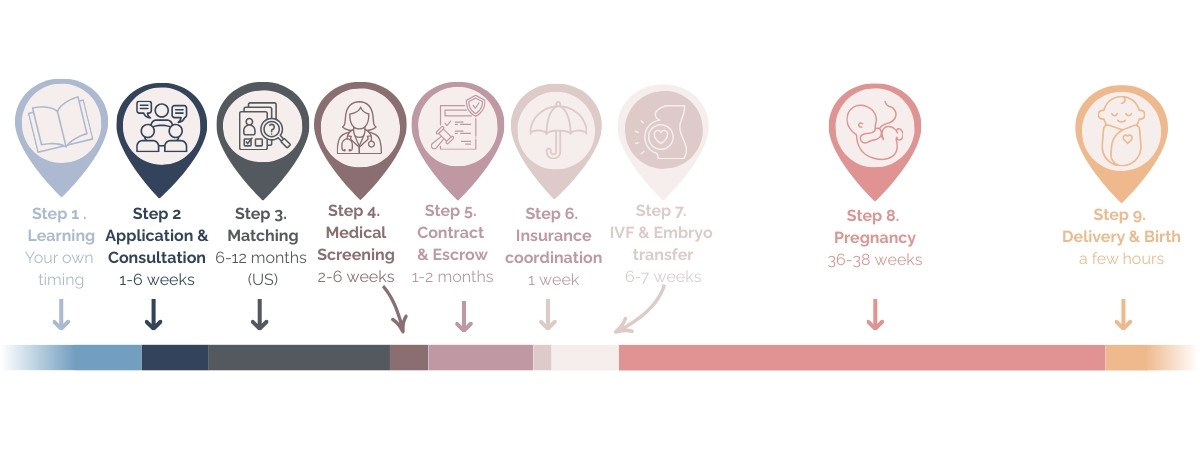
What is the Surrogacy Process in New York?
The surrogate process – when it comes to gestational surrogacy – follows the same surrogacy program in all states:
- Step 1 . Learning & Research
- Step 2: Application & Consultation
- Step 3. Matching
- Step 4. Medical Screening
- Step 5. Contract & Escrow
- Step 6. Insurance coordination 1 week
- Step 7. IVF & Embryo transfer 6-7 weeks
- Step 8. Pregnancy 36-38 weeks
- Step 9. Delivery & Birth a few hours