California Surrogacy: Laws & Complete Guide


General Surrogacy context in California
In the California Surrogacy Guide, SurrogateFirst compiles the latest available information from official sources to answer key questions, including:
- Is gestational and traditional surrogacy legal in California?
- What are the specific California surrogacy requirements, if any?
- What must be included in a legally valid California surrogacy contract?
- What factors influence the cost of surrogacy in California, including s compensation and agency fees?
- What influences how much surrogacy costs and surrogates get compensated in California compared to other states?
- How friendly is LGBTQ+ surrogacy in California?
Is Surrogacy Legal in California?
Statutory & case-law breakdown In California
The California Family Law Sections 7960 7962 (2013) outlines the surrogacy laws in California; these laws are some of the most straightforward in the United States making it one of the easiest places to become a parent through surrogacy.
Although the following guide can give you a better understanding of the general rules and regulations of surrogacy in California, it is not meant to be used as legal advice. It is important to consult with an experienced attorney to guide you through your unique journey.
Is Gestational Surrogacy Legal in California?
Yes. Gestational surrogacy is a common and well-regulated way to build your family in California.
Is Traditional Surrogacy Legal in California?
Yes. Traditional surrogacy is not directly addressed in California Family Law; therefore, it’s not illegal, but this means that it’s not well-regulated. Traditional surrogacy is also more difficult to navigate legally and typically has more emotional risks associated with it since the surrogate is genetically tied to the baby.
Is Compensated Surrogacy Legal in California?
Yes. Compensated surrogacy is legal in California and is regulated by California Surrogacy Laws. This is something that is established when the surrogacy contract between surrogates and intended parents is drafted. In addition to their base pay, surrogates are compensated for their time, the medical risks they accept, and the list of expenses below:
In terms of base compensation:
- Mock cycle compensation
- Embryo transfer compensation
- Starting medication compensation
In terms of additional allowances:
- Monthly allowance for miscellaneous expenses
- Monthly housekeeping budget
- Maternity clothing budget
- Lost wages if applicable
- Child care if bed rest is required
In terms of insurance:
- Term life insurance
- Medical insurance
In terms of covered expenses:
- Medical expenses
- Travel to and from clinic/hospital
- Independent legal counsel
- Psychological counseling
- Other, depending on agency
To understand the full extend of the surrogate compensation and the costs related to surrogacy, you can consult the surrogacy cost for intended parents page or calculate a detailed estimate based on your specific family requirements. As a surrogate, you can understand more about what the surrogate compensation is in California.
Definitions: Learn about the difference between all the types of surrogacy here or click the terms to understand each more in depth:
- Gestational Surrogacy vs Traditional
- Compensated Surrogacy (Commercial) vs Altruistic Surrogacy are
Surrogate Compensation in California
Surrogate compensation in the U.S. follows national industry standards and is not determined by state law. Outside of California, compensation ranges are largely consistent nationwide. (California experiences slightly higher ranges due to market demand and cost of living) However, the factor of experience affects more greatly the compensation: repeat surrogates typically receive higher compensation.
Surrogacy Costs in California
For intended parents, the overall cost structure of surrogacy is the same in every state, but individual line items may vary depending on location and professional fees.
Costs related to clinics, legal services and procedures, as well as insurance can vary by state, provider, and individual circumstances. While surrogate compensation, escrow management, agency fee
Surrogacy requirements:
who can become a surrogate in North Carolina?
Short answer: it is the same as in most states. Surrogate eligibility requirements are largely the same across all U.S. states, as they are driven by the American Society for Reproductive Medicine (ASRM) guidelines as medical guidelines, clinic standards, and ethical best practices rather than state law. There are 3 main categories of criteria that apply in this state and nationwide. However, there are many more details involved. Click below to understand the criteria into details.
- Health Based Requirements
- Lifestyle Factors
- Support System.
Note: While the surrogate requirements are consistent nationwide, intended parents must also meet any legal requirements related to contracts and parentage orders of the state they choose to conduct the surrogacy in, which are handled separately (below).
Surrogacy Contract & Court orders in North Carolina
Creating a California Surrogacy Contract
California surrogacy laws require that both parties in a surrogacy agreement have their own legal representation when drafting a surrogacy agreement or contract.
By law, a surrogacy contract in California must contain:
- The date it was executed
- The source of the egg, sperm, or embryo (if applicable)
- The identity of the intended parent(s)
- The process for any necessary pre-birth or parentage orders
The attorneys will work together to negotiate an agreement that addresses at least the following:
- Risks and responsibilities of each party
- Surrogate compensation
- Agreement on sensitive issues like selective reduction and termination
- Expectations on contact and who will be present at important appointments and during birth
- And more
Surrogate contracts must be notarized before any medication in connection with the embryo transfer procedure. Once the contract has been finalized and signed by both parties, the medical process of surrogacy can begin.
Determining Legal Parentage in California
Pre-birth parentage orders are permitted in California surrogacy legislation. No hearing is needed to obtain these pre-birth orders, so confirming the intended parents’ legal parental rights prior to the birth of the baby is relatively easy.
The exception to this would be if unmarried intended parents work with a surrogate who delivers in a state that does not allow pre-birth or parentage orders. In that case, they will usually need to complete an adoption in California after their child is born to establish their parental rights.
Most Common FAQ about surrogacy in California
Below is a list of some of the most frequently asked questions about surrogacy in California.
Are Surrogacy Contracts (Whether Compensated or Altruistic) Enforceable in California?
Yes. Surrogacy contracts completed legally according to the state statutes are enforceable in California.
Are There Any Particular Laws for Parents Outside the United States Who Complete a Surrogacy in California?
No. All surrogacy laws in California that apply to domestic intended parents also apply to international intended parents. It is important, however, that intended parents from another country speak with an immigration lawyer to ensure they follow the proper legal steps for taking their child home.
When Do Intended Parents Need to Complete an Adoption After Birth?
When unmarried intended parents from California work with a surrogate who gives birth in a state where they cannot obtain a pre-birth or parentage order, they can return to California to complete an adoption and establish their parental rights.
Does California Allow Second-Parent Adoptions? Who Would Need to Complete a Second-Parent Adoption vs. a Stepparent Adoption (If Applicable)?
Yes. Second-parent adoptions are available to unmarried couples to secure their parental rights over a child who is conceived via a gestational carrier arrangement. Stepparent adoptions are available to married couples.
What Happens in Cases Where Intended Parents Use a Donor Egg, Sperm, or Embryo?
Intended parents who complete a surrogacy in California are usually able to obtain a pre-birth order regardless of whether they used a donor egg, sperm, or embryo. California laws clearly state that neither a sperm donor nor an egg donor is a parent when their gametes are used in assisted reproduction and result in a child.
Same Sex surrogacy in California
Q: Is Same-Sex Surrogacy Legal in California?
Yes. Same-sex couples and LGBT+ intended parents have the same legal rights and will experience generally the same surrogacy process as opposite-sex couples, with the exception of likely requiring an egg donor to complete the IVF procedure.
Q: Are There any Additional Laws Impacting Same-Sex Parenting in California?
A: No. There are no additional laws impacting same-sex parents in this state.
Surrogacy Agencies & Legal Professionals in California
Looking for a Surrogacy Agency in California?
Whether a surrogate or intended parent(s), SurrogateFirst offers nation wide coverage and is there to accompany you on your journey in California as your surrogacy agency.
Find out more about how SurrogateFirst can support in California here:
Looking for a surrogacy attorney in California, Los Angeles or Culver City?
Choosing the right professionals is an essential part of any surrogacy journey. Here is a non-exhaustive directory of legal professionals active in North Carolina, provided for informational purposes.
Rich Vaughn
Los Angeles, CA
Rich@iflg.net
Visit International Fertility Law Group for more details
(323) 904-4733
Law Offices of Molly O’Brien
Los Angeles, CA
Molly@yourfertilitylawyer.com
Visit Your Fertility Lawer for more details
The Law Offices of D. Durand Cook
Culver City, CA
Durand@adoption-option.com
Visit Adoption Option for more details
Andy Huang, MD, MBA
Reproductive Partners Medical Group
Visit Reproductive Partners Medical Group for more details
Need some help with Legal Aspects of surrogacy in California?
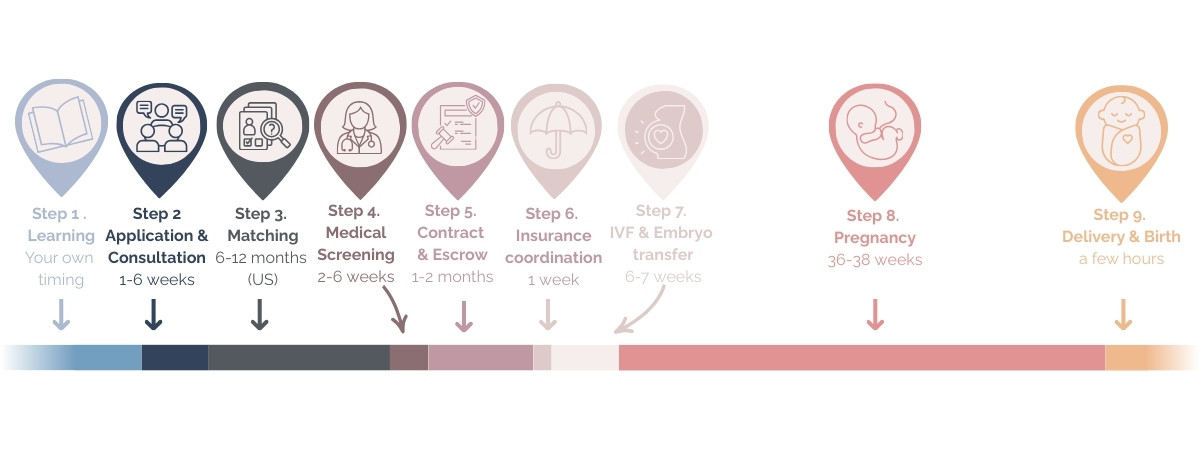
What is the Surrogacy Process in California?
The surrogate process – when it comes to gestational surrogacy – follows the same surrogacy program in all states:
- Step 1 . Learning & Research
- Step 2: Application & Consultation
- Step 3. Matching
- Step 4. Medical Screening
- Step 5. Contract & Escrow
- Step 6. Insurance coordination 1 week
- Step 7. IVF & Embryo transfer 6-7 weeks
- Step 8. Pregnancy 36-38 weeks
- Step 9. Delivery & Birth a few hours