Wyoming Surrogacy: Laws & Complete Guide

General Surrogacy context in Wyoming
In the Wyoming Surrogacy Guide, SurrogateFirst compiles the latest available information from official sources to answer key questions, including:
- Is gestational and traditional surrogacy legal in Wyoming?
- What specific surrogacy requirements apply in Wyoming, if any?
- What must be included in a legally valid Wyoming surrogacy contract?
- What factors influence the cost of surrogacy in Wyoming, including s compensation and agency fees?
- What influences how much surrogacy costs and surrogates get compensated in Wyoming compared to other states?
- How friendly is LGBTQ+ surrogacy in Wyoming?
Is Surrogacy Legal in Wyoming?
Statutory & case-law breakdown In Wyoming
However, Wyoming HB 73 took effect July 1, 2021. It has provided a specific pathway for qualifying gestational surrogacy agreements and birth registration.
Under Wyoming law, a qualifying gestational agreement must meet requirements related to the age and residency of the parties, the terms of the agreement, compensation, and filing with the state registrar of vital records. When those requirements are met, the intended parents can be recognized as the child’s parents for birth registration purposes.
Although the following guide can give you a better understanding of the general rules and regulations of surrogacy in Wyoming, it is not meant to be used as legal advice. It is important to consult with an experienced attorney to guide you through your unique journey.
Below is a list of some of the most frequently asked questions about surrogacy in Wyoming.
Is Gestational Surrogacy Legal in Wyoming?
Yes. Gestational surrogacy is permitted in Wyoming, and state law provides a specific pathway for qualifying gestational agreements.
Wyoming defines a gestational agreement as a written, notarized agreement between two intended parents and a gestational carrier that meets certain statutory requirements. If those requirements are satisfied, Wyoming provides a process for the intended parents to be recognized on the child’s birth record.
Is Traditional Surrogacy Legal in Wyoming?
Wyoming does not have a specific statutory framework for traditional, or genetic, surrogacy like it does for qualifying gestational agreements.
State law does not expressly prohibit this type of arrangement, but the 2021 gestational agreement provisions apply specifically to a gestational carrier. Because a traditional surrogate is genetically related to the child, parentage and enforceability can be more complicated.
Anyone considering traditional surrogacy in Wyoming should work closely with an experienced reproductive attorney before moving forward.
Is Compensated Surrogacy Legal in Wyoming?
Wyoming does not provide for unrestricted commercial surrogacy compensation under its statutory gestational agreement pathway.
For a qualifying gestational agreement, compensation is limited to expenses related to prenatal care, delivery, and other costs directly connected to the pregnancy, including the cost of lost opportunity.
This makes Wyoming different from states such as California or Colorado, where a gestational surrogate may receive separately negotiated base compensation.
Definitions: Learn about the difference between all the types of surrogacy here or click the terms to understand each more in depth:
- Gestational Surrogacy vs Traditional
- Compensated Surrogacy (Commercial) vs Altruistic Surrogacy are
Surrogate Compensation in Wyoming
Surrogate compensation in the U.S. follows national industry standards and is not determined by state law. Outside of California, compensation ranges are largely consistent nationwide. (California experiences slightly higher ranges due to market demand and cost of living) However, the factor of experience affects more greatly the compensation: repeat surrogates typically receive higher compensation.
Surrogacy Costs in Wyoming
For intended parents, the overall cost structure of surrogacy is the same in every state, but individual line items may vary depending on location and professional fees.
Costs related to clinics, legal services and procedures, as well as insurance can vary by state, provider, and individual circumstances. While surrogate compensation, escrow management, agency fee
Surrogacy requirements:
who can become a surrogate in Wyoming?
- Health Based Requirements
- Lifestyle Factors
- Support System.
Note: While the surrogate requirements are consistent nationwide, intended parents must also meet any legal requirements related to contracts and parentage orders of the state they choose to conduct the surrogacy in, which are handled separately (below).
Wyoming has specific legal requirements for individuals entering into a surrogacy agreement.
For a qualifying Wyoming gestational agreement:
- All parties must be at least 21 years old
- There must be two intended parents
- Both intended parents must have lived in Wyoming for at least one year immediately before the agreement
- The gestational agreement must be written and notarized
- If the gestational carrier is married, her spouse must also agree to relinquish parental rights and duties
- The agreement must state that the intended parents will become the child’s parents
- The agreement must be filed with the Wyoming state registrar of vital records
- Compensation must stay within the limits set by Wyoming law
Surrogacy agencies and fertility clinics may have additional medical, lifestyle, pregnancy-history, and screening requirements beyond what Wyoming law requires.
Surrogacy Contract & Court orders in Wyoming
Creating a Wyoming Surrogacy Contract
Wyoming law sets specific requirements for a gestational agreement that will qualify for the state’s birth-registration process.
The agreement must be written and notarized and entered into by two intended parents and a gestational carrier. It must state that the carrier agrees to become pregnant through assisted reproduction, that the intended parents will become the child’s parents, and that the carrier and her spouse, if married, relinquish parental rights and duties.
Both intended parents must also have lived in Wyoming for at least one year before signing the agreement, and the agreement must be filed with the state registrar of vital records. Compensation must remain within the limits established by Wyoming law.
Determining Legal Parentage in Wyoming
Wyoming provides a specific parentage and birth-registration process for children born under a qualifying gestational agreement.
After the child is born, the intended parents submit an application to the state office of vital records. Once the office verifies that the gestational agreement meets Wyoming’s statutory requirements, the intended parents are recognized as the child’s parents for purposes of birth registration and the birth certificate.
Journeys that do not meet these statutory requirements may require a different legal process, so intended parents should discuss parentage planning with a Wyoming reproductive attorney before embryo transfer.
Most Common FAQ about surrogacy in Wyoming
Q: Are Surrogacy Contracts (Whether Compensated or Altruistic) Enforceable in Wyoming?
A: Wyoming law sets requirements for a gestational agreement to qualify for the state’s statutory birth-registration process. However, Wyoming does not have a comprehensive surrogacy statute addressing the enforceability of every provision in a surrogacy agreement.
Because enforceability may depend on the agreement and circumstances involved, both intended parents and surrogates should work with experienced reproductive attorneys before entering into an agreement.
Q: Are There Any Particular Laws for Parents Outside the United States Who Complete a Surrogacy in Wyoming?
A: Wyoming’s statutory gestational agreement pathway is generally not available to intended parents who live outside Wyoming. The law requires both intended parents to have been Wyoming residents for at least one year before entering into the gestational agreement.
International intended parents considering any Wyoming-based arrangement should speak with both a reproductive attorney and an immigration or nationality attorney before moving forward.Q: When do Intended Parents Need to Complete an Adoption After Birth?
A: It is unclear whether second-parent adoptions are permitted; however, it is clear that stepparent adoptions are permitted.
Q: Does Wyoming Allow Second-Parent Adoptions? Who Would Need to Complete a Second-Parent Adoption vs. a Stepparent Adoption (If Applicable)?
A: It is unclear whether second-parent adoptions are permitted; however, it is clear that stepparent adoptions are permitted.
Q: What Happens in Cases Where Intended Parents use a Donor Egg, Sperm or Embryo?
A: Wyoming law provides that a donor is not a legal parent solely because they provided genetic material for assisted reproduction. Intended parents using donor eggs, sperm, or embryos should still confirm how their specific parentage process will work under the gestational agreement and birth-registration requirements.
Same Sex surrogacy in Wyoming
Is Same-Sex Surrogacy Legal in Wyoming?
Wyoming law does not expressly exclude same-sex couples from entering into a gestational agreement. The statute defines intended parents as “two persons,” and both must meet the state’s eligibility and residency requirements.
However, Wyoming’s surrogacy statutes are limited and some of the birth-registration language still uses gender-specific terms. LGBTQ+ intended parents should work with an experienced reproductive attorney to confirm the parentage and birth-certificate process before beginning a journey.
Are There any Additional Laws Impacting Same-Sex Parenting in Wyoming?
No. There are no additional laws impacting same-sex parents in this state.
Surrogacy Agencies & Legal Professionals in Wyoming
Looking for a Surrogacy Agency in Wyoming?
Whether a surrogate or intended parent(s), SurrogateFirst offers nation wide coverage and is there to accompany you on your journey in Wyoming as your surrogacy agency.
Find out more about how SurrogateFirst can support in Wyoming here:
Looking for a surrogacy attorney in Wyoming, Jackson?
Choosing the right professionals is an essential part of any surrogacy journey. Here is a non-exhaustive directory of legal professionals active in Wyoming, provided for informational purposes.
Lauren Browne
Jackson, WY
lauren@mannenbrowne.com
Visit Mannen Browne Law for more details
(307) 733-7424
Need some help with Legal Aspects of surrogacy in Wyoming?
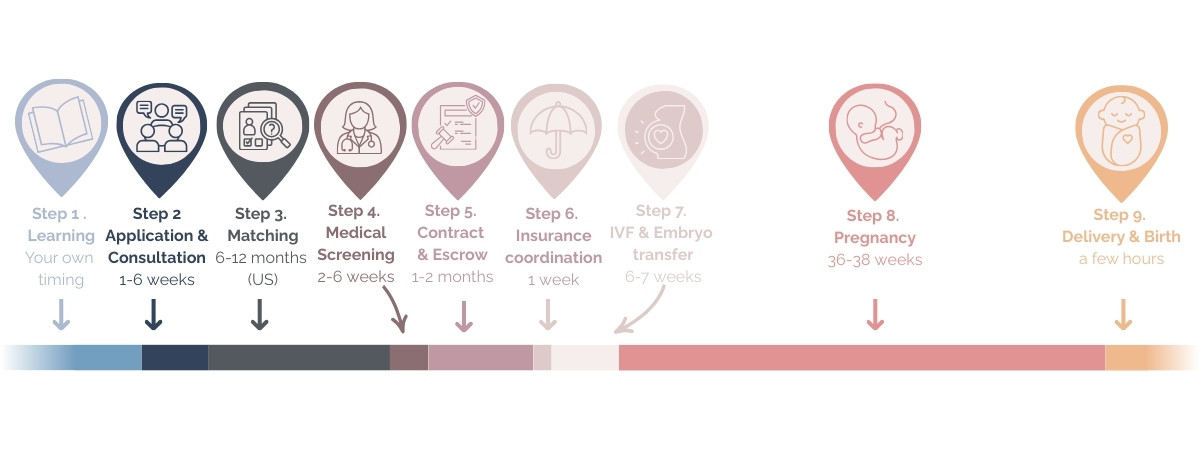
What is the Surrogacy Process in Wyoming?
The surrogate process – when it comes to gestational surrogacy – follows the same surrogacy program in all states:
- Step 1 . Learning & Research
- Step 2: Application & Consultation
- Step 3. Matching
- Step 4. Medical Screening
- Step 5. Contract & Escrow
- Step 6. Insurance coordination 1 week
- Step 7. IVF & Embryo transfer 6-7 weeks
- Step 8. Pregnancy 36-38 weeks
- Step 9. Delivery & Birth a few hours