

Bringing a child into the world through surrogacy is one of the most meaningful journeys an intended parent can take.
At SurrogateFirst, we’ve supported hundreds of families through this process, and we know how important it is to understand each step before you begin.
Whether you’re just starting to research or are ready to move forward as a surrogate or intended parent, this guide breaks down the surrogacy process from match to miracle in a clear, step-by-step format, with a timeframe for each step.
How long does the surrogacy process take?
On average, from consultation to delivery, the process can take 18 –24 months. This depends on
- How quickly you match,
- Legal timelines,
- Embryo transfer success.
Matching, for instance, takes from 4-8 weeks. IVF and embryo transfer can take from 6-7 weeks.
Surrogacy Process Steps with Timeline
Below you will find the key milestones of the surrogacy process overall – for all the parties involved and for general information.
- If you are an intended parent, here is a detailed step by step surrogacy process to guide you.
- If you are a gestational carrier, you can learn more about how to become a surrogate here and in our blog article.
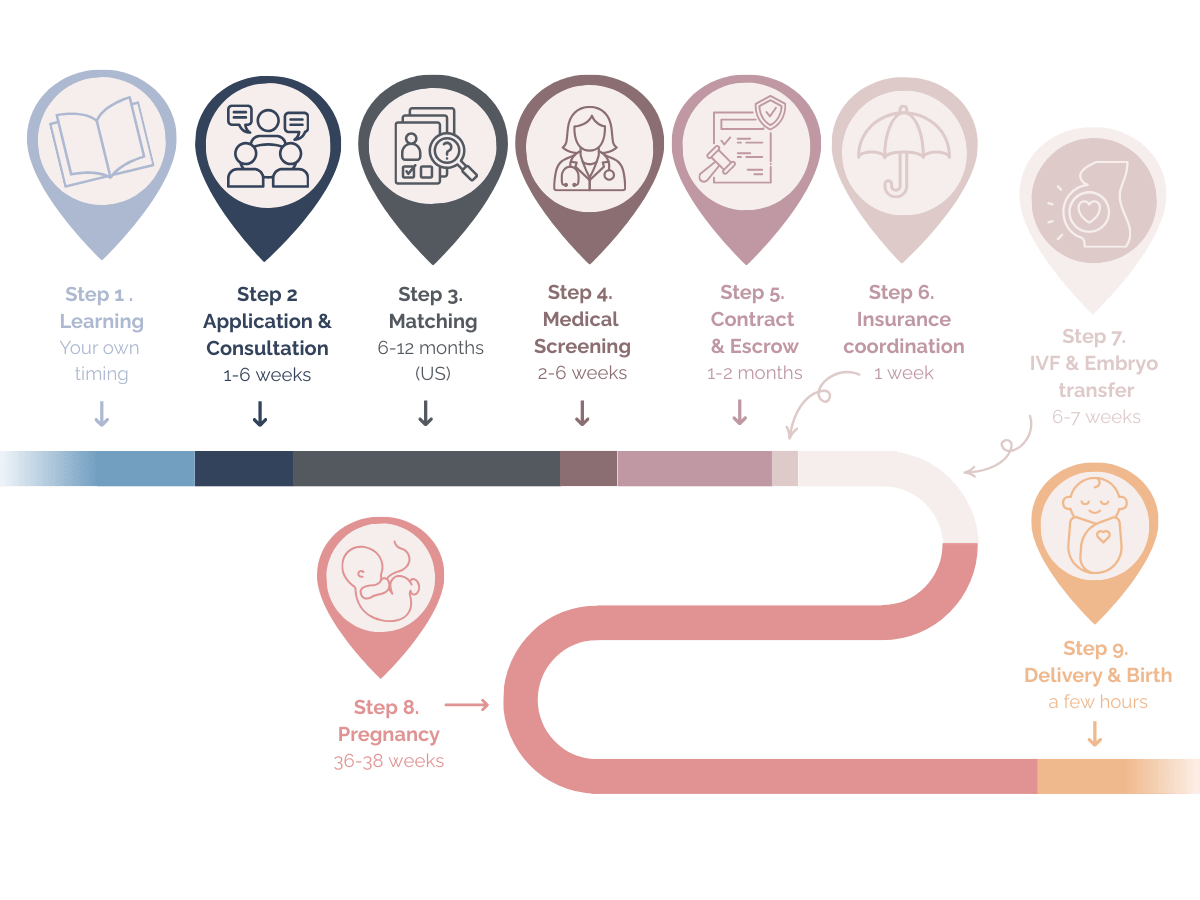
Step 1. Learn About Surrogacy
Timeframe: on your own terms
Surrogacy can seem overwhelming at first, so the best place to begin is by learning the basics.
There are two main types of surrogacy:
- Gestational surrogacy (most common in the U.S.): In gestational surrogacy, the surrogate carries a baby who is not genetically related to her. traditional surrogacy.
- Traditional surrogacy, also called genetic surrogacy. In traditional surrogacy, the surrogate receives a procedure called intrauterine insemination (IUI).
Understanding the difference, as well as the legal, emotional, and financial aspects, is key to making an informed decision.
Whether you are just beginning your research or preparing for the next step, these SurrogateFirst surrogacy resources will help you understand surrogacy with clarity and confidence.
- If you are an intended parent, learn the full journey, and what to expect in every stage here.
- If you are a gestational carrier, learn about surrogate requirements and BMI requirements.
- You can also take a short “Should I be a Surrogate” quiz.
- If you prefer learning through real stories, there are books and podcasts that can provide deeper insights into the practical and emotional aspects of surrogacy, for instance:
- More than just a baby: A guide to surrogacy for intended parents and surrogates.
- Fertility Forward Podcast: with interviews of a wide range of fertility experts — including medical professionals, mental health specialists, wellness practitioners, and others — to share evidence-based information and supportive conversations about fertility, reproductive health, and family building.
- If you like the video format most, you can start with the SurrogateFirst Academy introduction to understand the process from the beginning:
Everything you need to know - in a few videos:
Step 2. Application & Initial Consultation
Timeframe: IP 1 - 3 weeks / GC 2 - 6 weeks
- Intended parents: Once the intended parent is ready to take the next step, a consultation with a surrogacy agency of your choice or fertility clinic can provide clarity. You’ll get to ask questions about the process, costs, expected timelines, and what kind of support you’ll receive.
- Surrogates: The surrogate application process takes around 4-8 weeks although timing can vary depending on how quickly the medical records and requirements are received.
At SurrogateFirst, this meeting is also about getting to know you, so we can help match the right surrogate with the right intended parent.
Step 3. Matching
Timeframe: 6-12 Months (avg time in the US)
The matching process is one of the most exciting parts of your journey. Agencies like SurrogateFirst carefully screen all potential surrogates and look for alignment on values, expectations, state laws, and communication styles.
Once clearance is complete, the matching phase begins. Some matches happen quickly while others may take a few weeks, depending on preferences and other factors. The priority is never speed, it is compatibility. Matching focuses on making sure that both intended parents and surrogates align in expectations, communication style, legal understanding, and overall comfort with one another before moving forward together.
WHAT INTENDED PARENTS SAY ON MATCHING
It’s so important to pause and reflect on what kind of match would truly feel right for your family. While location may matter, there are often other qualities that deserve just as much consideration. Many intended parents find themselves asking, “Do we hope for someone who communicates frequently, shares regular updates, and welcomes us closely into the journey? Or would we feel more comfortable with a more private experience?” Giving yourself the space to think through these questions can bring clarity and confidence — and ultimately help you find a match that feels not just suitable, but genuinely right.
A & M, Intended Parents

Step 4. Medical Screening
Timeframe: 2-6 weeks
- Ultrasound
- Saline sonogram (HSG or hydro sonogram)
- Occasionally hysteroscopy
- Extensive bloodwork
Step 5. Contract and Financial Planning
Timeframe: 1-2 months
Surrogacy Contract
At this stage, the intended parents are introduced to legal teams and choose an attorney, typically based on the location of the IVF clinic and the surrogate. Because surrogacy involves complex legal details, both the intended parents and the surrogate must have separate legal representation. The attorneys prepare and review the surrogacy contract, which outlines important terms such as compensation, parental rights, medical expectations, responsibilities, and plans for delivery and post-birth arrangements.
Each party meets privately with their own attorney — either in person or online — to review the agreement carefully, ask questions, and ensure it reflects what has been discussed and agreed upon. Once the contract is finalized, signed, and notarized, the process moves forward to IVF and embryo transfer. The surrogate then begins receiving the agreed-upon allowances, insurance coverage, and other provisions included in the contract. Legal parentage is finalized either before birth or shortly after, depending on state law.
Financial planning
The Surrogate’s Escrow Account is used to manage payments for surrogate compensation and other related costs. This ensures peace of mind for everyone and transparent handling of all financial obligations.
The account is usually set up earlier than the legal stage – as there are already expenses as soon as medical screening, but the compensation of the surrogate in the form of a monthly allowance is given to the surrogate only after the legal contract is signed and notarized.
At SurrogateFirst, we work with top legal experts to ensure a smooth and ethical agreement for all involved.
Learn more about financial planning and financial help here.
Step 6. Insurance Coordination
Timeframe: 1 week
It’s important to have the right insurance coverage in place for your surrogate’s care and delivery. Your agency will help evaluate existing coverage and guide you through obtaining a surrogacy-friendly policy if needed.
More guidance about finding your surrogacy insurance is available here.
Step 7. IVF & Embryo Transfer
Timeframe: 6 - 7 weeks
With all plans in place, the medical phase begins. The surrogate will start a protocol of medications to prepare her uterus for embryo transfer. Once the embryo is transferred (4 weeks IVF cycle) then the two-week wait begins.
A positive beta (pregnancy) test and subsequent heartbeat confirmation signal a successful start to the pregnancy.
Step 8. Pregnancy
Timeframe: 36 - 38 Weeks from transfer
Throughout the pregnancy, the surrogate receives regular prenatal care. Intended parents are encouraged to be involved, attending ultrasounds, joining appointments (virtually or in person), and building a connection with the surrogate if all parties are comfortable.
The Pre-Birth Order (PBO, defined here) and the post-birth plans are discussed at this time, and prior to delivery. This way, the Intended Parents and the Surrogate have a clear agreement for what will happen around delivery, birth plan arrangements and postpartum communication for instance.
Step 9. Delivery & Birth formalities
Timeframe: 1 week
Finally, the long-awaited moment arrives: the birth of your baby. The delivery plan is reviewed in advance to ensure everyone knows what to expect. This moment is powerful, emotional, and life-changing, and marks the beginning of a new chapter for your growing family. The Pre-Birth Order and Post-Birth plans are discussed prior to delivery to agree upon delivery arrangements and postpartum communication.
After Surrogacy: What Comes Next?
The surrogacy journey doesn’t end in the delivery room. Post-birth, legal paperwork finalizes parental rights, and many families stay in touch with their surrogates. At SurrogateFirst, we celebrate these lasting connections and offer continued support for both parents and surrogates long after the baby is born.
- Surrogates: post birth recovery, breast milk delivery
- Intended parents: start your new life with your baby
How SurrogateFirst Supports You Every Step of the Way
At SurrogateFirst, we believe in a compassionate, transparent, and personalized approach to surrogacy. From the moment you reach out to us until you’re holding your baby, our team is by your side—providing education, emotional support, expert coordination, and advocacy for both intended parents and surrogates. You can read more about all the ways we can support here.
Surrogacy Process FAQs
What are the main steps involved in the surrogacy process in the US?
The surrogacy process in the United States typically follows a structured path to ensure safety and legal protection for everyone involved.
The main steps include application and screening, matching between surrogate and intended parents, medical evaluation, legal contracts, IVF embryo transfer, pregnancy, and delivery with postpartum support.
Each stage confirms readiness before moving forward, so both surrogate and intended parents can proceed with confidence.
What is the typical timeline for a surrogacy journey?
Most surrogacy journeys take about 12 to 18 months from application to birth, although timelines vary.
Screening and matching may take a few weeks to a few months, followed by medical clearance and legal contracts. IVF preparation and embryo transfer usually occur several months after matching.
Once pregnancy is confirmed, the journey follows a standard pregnancy timeline of about 37 to 40 weeks, plus postpartum recovery for the surrogate.
What is the surrogacy process for gay parents?
The surrogacy process for gay parents follows the same overall steps as any intended parents: choosing an agency, matching with a surrogate, medical and legal preparation, embryo transfer, pregnancy, and birth.
For male same-sex couples, an egg donor is also part of the process to create embryos through IVF. Legal parentage is established through pre-birth or post-birth orders so both parents are recognized on the birth certificate.
Agencies experienced in LGBTQ+ family building ensure the journey is inclusive, legally secure, and fully supported.
What to look for in a surrogacy agency?
A strong surrogacy agency prioritizes safety, transparency, and education. Look for an agency that provides thorough screening, experienced coordinators, independent legal support, and clear communication throughout the journey.
Matching should focus on compatibility rather than speed, and the agency should guide both surrogate and intended parents through medical, legal, and emotional aspects of surrogacy.
Ethical agencies never rush decisions and ensure all parties feel informed and supported before moving forward.
What comes after submitting an application online as a surrogate?
After you submit a surrogate application, the agency reviews your responses and schedules an intake interview.
During this conversation, you can ask questions and learn more about the surrogacy process while the coordinator confirms details from your application.
If both you and the agency feel comfortable moving forward, screening begins. This includes collecting medical records, completing background checks, and creating your profile before entering the matching phase with intended parents.
What are the requirements to become a surrogate?
While requirements can vary by clinic and state, most surrogates must be between 21 and 40 years old (ASRM guidelines say 45 years old maximum, but based on SurrogateFirst experience, Intended Parents would rarely approve surrogates beyond 40 years old), have had at least one healthy pregnancy and delivery, and be raising their own child.
They should be in good physical and mental health, have a stable lifestyle, and live in a supportive environment. Surrogates must also be willing to undergo medical screening, background checks, and legal agreements before beginning IVF.
These requirements help ensure safety for the surrogate, the intended parents, and the baby.
Can the surrogate change her mind?
Before pregnancy, the surrogate can change her mind and back out. Once pregnant, the baby is the parents and she could not change her mind and keep the baby. Legal contracts are designed to protect all parties, and clear agreements prevent such issues. With proper support and ethical agency practices, this risk is extremely low.
Do surrogates get paid if they miscarry?
Surrogates are typically compensated for their time, effort, and milestones achieved. If a pregnancy ends early, payments reflect completed stages as outlined in the contract.
Why SurrogateFirst?
At SurrogateFirst, we’re more than a matching agency—we’re your support system.
- Compassionate, personalized matching
- 24/7 access to dedicated case managers
- Legal and medical coordination
- Transparent pricing
- Emotional support for surrogates and for intended parents alike