Arizona Surrogacy: Laws & Complete Guide


General Surrogacy context in Arizona
- Is gestational and traditional surrogacy legal in Arizona?
- What specific surrogacy requirements apply in Arizona, if any?
- What must be included in a legally valid Arizona surrogacy contract?
- What factors influence the cost of surrogacy in Arizona, including s compensation and agency fees?
- What influences how much surrogacy costs and surrogates get compensated in Arizona compared to other states?
- How friendly is LGBTQ+ surrogacy in Arizona?
Is Surrogacy Legal in Arizona?
Statutory & case-law breakdown In Arizona
Arizona expressly prohibits surrogacy under Arizona Revised Statute § 25-218 which states that no person may enter into or assist in creating a surrogacy contract, making surrogacy contracts unenforceable. The statute further establishes a rebuttable presumption that the surrogate is the legal mother and her husband, if any, is the legal father. However, couples and individuals now routinely petition Arizona courts for an order declaring them the legal parents of a child born through a surrogate.
After a 1994 Arizona court decision ruled that intended parents can rebut the statutory presumption that the gestational carrier is the legal mother of a child, Soos v. Superior Court (1994), courts now grant such pre-birth orders, but the surrogacy contracts remain unenforceable.
Although the following guide can give you a better understanding of the general rules and regulations of surrogacy in Arizona, it is not meant to be used as legal advice. It is important to consult with an experienced attorney to guide you through your unique journey.
Below is a list of some of the most frequently asked questions about surrogacy in Arizona.
Is Gestational Surrogacy Legal in Arizona?
Technically, gestational surrogacy is legal but under Arizona Revised Statute § 25-218, surrogacy contracts are statutorily unenforceable. Despite this, gestational surrogacy continues to be practiced in Arizona. Some attorneys will not prepare surrogacy agreements, while others prepare letters of understanding or agreements that include exculpatory language about their un-enforceability.
Is Traditional Surrogacy Legal in Arizona?
The Arizona statute that prohibits gestational surrogacy contracts also prohibits traditional surrogacy contracts so pursuing this route comes with legal risks.
Is Compensated Surrogacy Legal in Arizona?
No. Compensated surrogacy is not legal in Arizona. Arizona Revised Statute § 25-218 which states that no person may enter into or assist in creating a surrogacy contract, making surrogacy contracts unenforceable.
Definitions: Learn about the difference between all the types of surrogacy here or click the terms to understand each more in depth:
- Gestational Surrogacy vs Traditional
- Compensated Surrogacy (Commercial) vs Altruistic Surrogacy are
Surrogate Compensation in Arizona
Surrogate compensation in the U.S. follows national industry standards and is not determined by state law. Outside of California, compensation ranges are largely consistent nationwide. (California experiences slightly higher ranges due to market demand and cost of living) However, the factor of experience affects more greatly the compensation: repeat surrogates typically receive higher compensation.
Surrogacy Costs in Arizona
For intended parents, the overall cost structure of surrogacy is the same in every state, but individual line items may vary depending on location and professional fees.
Costs related to clinics, legal services and procedures, as well as insurance can vary by state, provider, and individual circumstances. While surrogate compensation, escrow management, agency fee
Surrogacy requirements:
who can become a surrogate in Arizona?
Short answer: it is the same as in most states. Surrogate eligibility requirements are largely the same across all U.S. states, as they are driven by the American Society for Reproductive Medicine (ASRM) guidelines as medical guidelines, clinic standards, and ethical best practices rather than state law. There are 3 main categories of criteria that apply in this state and nationwide. However, there are many more details involved. Click below to understand the criteria into details.
- Health Based Requirements
- Lifestyle Factors
- Support System.
Note: While the surrogate requirements are consistent nationwide, intended parents must also meet any legal requirements related to contracts and parentage orders of the state they choose to conduct the surrogacy in, which are handled separately (below).
Surrogacy Contract & Court orders in Arizona
Creating an Arizona Surrogacy Contract
Since Arizona explicitly prohibits surrogacy, there is not a specific set of guidelines for when an Arizona judge may uphold the validity of a surrogacy arrangement. Parties should articulate their intentions, desires, roles, and responsibilities as clearly and specifically as possible to provide proper framework for dispute resolution should an issue arise. Both intended parents and their surrogate must be represented by separate surrogate attorneys to ensure both parties rights and interests are protected. These attorneys will negotiate a contract that addresses at least the following:
- The rights and responsibilities of each party
- Any potential risks and liabilities, and the steps to take should they occur
- Surrogate compensation and other financial information, like surrogacy insurance
- Agreements on sensitive issues like selective reduction and termination
- Contact expectations
- And more
Only after this contract is finalized will fertility clinics and medical professionals begin the medical process of surrogacy.
Determining Legal Parentage in Arizona
Following a 1994 Arizona court decision allowing the intended parents to rebut the presumption that the gestational carrier is the legal mother, Arizona courts began granting pre-birth parentage orders (while still maintaining that the underlying contracts are unenforceable). Pre-birth parentage orders are now likely to be granted when both the intended parents, regardless of marital status, are genetically related to the child. When neither intended parent shares a genetic relationship to the child, a parentage order will not be possible, and a married heterosexual couple must instead wait until after the child’s delivery to file for a stepparent adoption. Second-parent adoptions are prohibited in Arizona, leaving same-sex couples with no genetic relation to the child with little to no recourse for securing their parental rights unless they go outside the state to obtain a second-parent adoption.
Most Common FAQ about surrogacy in Arizona
Below is a list of some of the most frequently asked questions about surrogacy in Arizona:
Is Compensated Surrogacy Legal in Arizona?
No. Compensated surrogacy is not legal in Arizona. Arizona Revised Statute § 25-218 states that no person may enter into or assist in creating a surrogacy contract, making surrogacy contracts unenforceable.
Are Surrogacy Contracts (Whether Compensated or Altruistic) Enforceable in Arizona?
No. Arizona expressly prohibits surrogacy under Arizona Revised Statute § 25-218, which states that no person may enter into or assist in creating a surrogacy contract, rendering such contracts unenforceable.
When do Intended Parents Need to Complete an Adoption After Birth?
In Arizona, the necessity for intended parents to complete an adoption after birth depends on their genetic relationship to the child and marital status:
- Married Heterosexual Couples: If both intended parents are genetically related to the child, they can typically obtain a pre-birth parentage order, establishing their legal parental rights before birth. However, if only one parent is genetically related, the non-genetic parent must pursue a stepparent adoption after the child’s birth to secure legal parental rights.
- Unmarried Couples and Same-Sex Couples: Arizona prohibits second-parent adoptions, which poses challenges for unmarried and same-sex couples. In such cases, only the biological parent can obtain a pre-birth order, and the non-biological parent must seek a second-parent adoption outside of Arizona to establish legal parental rights.
Does Arizona Allow Second-Parent Adoptions? Who Would Need to Complete a Second-Parent Adoption vs. a Stepparent Adoption (If Applicable)?
Arizona explicitly prohibits second-parent adoptions. This prohibition affects unmarried couples and same-sex couples where one partner is not biologically related to the child:
- Second-Parent Adoption: Not permitted within Arizona. Unmarried couples, including same-sex couples, must pursue second-parent adoptions in jurisdictions outside of Arizona to establish legal parental rights for the non-biological parent.
- Stepparent Adoption: Available to married couples where one spouse is not genetically related to the child. The non-genetic parent can complete a stepparent adoption after the child’s birth to secure legal parental rights.
What Happens in Cases Where Intended Parents Use a Donor Egg, Sperm, or Embryo?
The use of donor gametes in Arizona impacts the establishment of parental rights as follows:
- Married Couples Using Donor Gametes: If a married couple uses donor eggs, sperm, or embryos, and only one intended parent is genetically related to the child, the genetic parent can obtain a pre-birth parentage order. The non-genetic parent must then complete a stepparent adoption after birth to establish legal parental rights.
- Unmarried Couples and Same-Sex Couples Using Donor Gametes: Given Arizona’s prohibition on second-parent adoptions, the non-genetic parent cannot establish legal parental rights within the state. These couples must seek second-parent adoptions in other jurisdictions to secure parental rights for the non-biological parent.
Same Sex surrogacy in Arizona
Q: Is Same-Sex Surrogacy Legal in Colorado?
A: Yes but again, Arizona expressly prohibits surrogacy under Arizona Revised Statute § 25-218 which states that no person may enter into or assist in creating a surrogacy contract, making surrogacy contracts unenforceable.
Q: Are There any Additional Laws Impacting Same-Sex Parenting in Colorado?
A: Arizona will only grant pre-birth orders when both the intended parents, regardless of marital status, are genetically related to the child. Since second-parent are prohibited in Arizona, leaving same-sex couples with no genetic relation to the child with little to no recourse for securing their parental rights unless they go outside the state to obtain a second-parent adoption.
Surrogacy Agencies & Legal Professionals in Arizona
Looking for a Surrogacy Agency in Arizona?
Whether a surrogate or intended parent(s), SurrogateFirst offers nation wide coverage and is there to accompany you on your journey in Arizona as your surrogacy agency.
Find out more about how SurrogateFirst can support in Arizona here:
Looking for a surrogacy attorney in Arizona, Tucson & Phoenix?
Choosing the right professionals is an essential part of any surrogacy journey. Here is a non-exhaustive directory of legal professionals active in Arizona, provided for informational purposes.
Heather Strickland
Tucson, AZ
heather@myersstrickland.com
Visit Myers Strickland for more details
(520) 327-6041
Amy Wallace
Phoenix, AZ
amy@surrogacylawoffice.com
Visit Surrogacy Law Office for more details
(866) 398-9331
Rita Meiser
Phoenix, AZ
rmeiser@meiserlaw.com
(602) 650-2473
Need some help with Legal Aspects of surrogacy in Arizona?
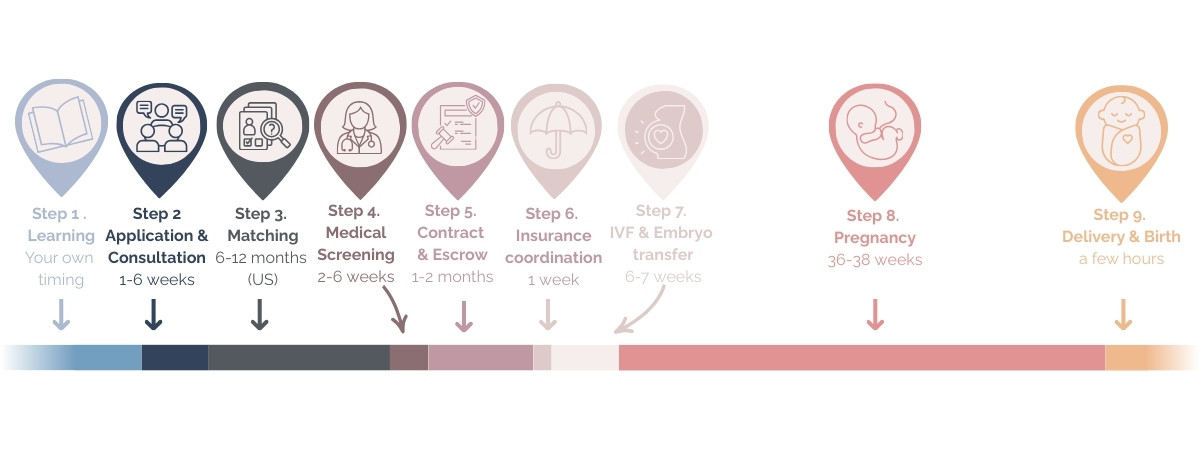
What is the Surrogacy Process in Arizona?
The surrogate process – when it comes to gestational surrogacy – follows the same surrogacy program in all states:
- Step 1 . Learning & Research
- Step 2: Application & Consultation
- Step 3. Matching
- Step 4. Medical Screening
- Step 5. Contract & Escrow
- Step 6. Insurance coordination 1 week
- Step 7. IVF & Embryo transfer 6-7 weeks
- Step 8. Pregnancy 36-38 weeks
- Step 9. Delivery & Birth a few hours