

The simple answer: There is no universal limit. It depends from case to case and there are recommendations by ASRM (The American Society of Reproductive Medicine). Your ability to become a surrogate again is shaped by your overall health, your birth history, and how well you recovered from previous pregnancies (find all the requirements to be a surrogate and take the test here).
And if you are wondering what that means to you personally, worry not because this article will guide you through determining the answer for your own situation.
Every journey is unique, and doctors look at factors like the number of prior deliveries, C-section history, and your emotional readiness before giving the green light. If your body is healthy and your OB approves, many women safely complete more than one surrogacy journey.
So, how many times can you be a surrogate?
There is no legal or nationwide maximum number of surrogacy journeys.
There is no law that states someone can only be a surrogate a certain number of times. What matters most is that your body has recovered well from previous pregnancies and that a doctor confirms you are safe to carry again. Every journey begins with updated medical and psychological screening to ensure your health is protected.
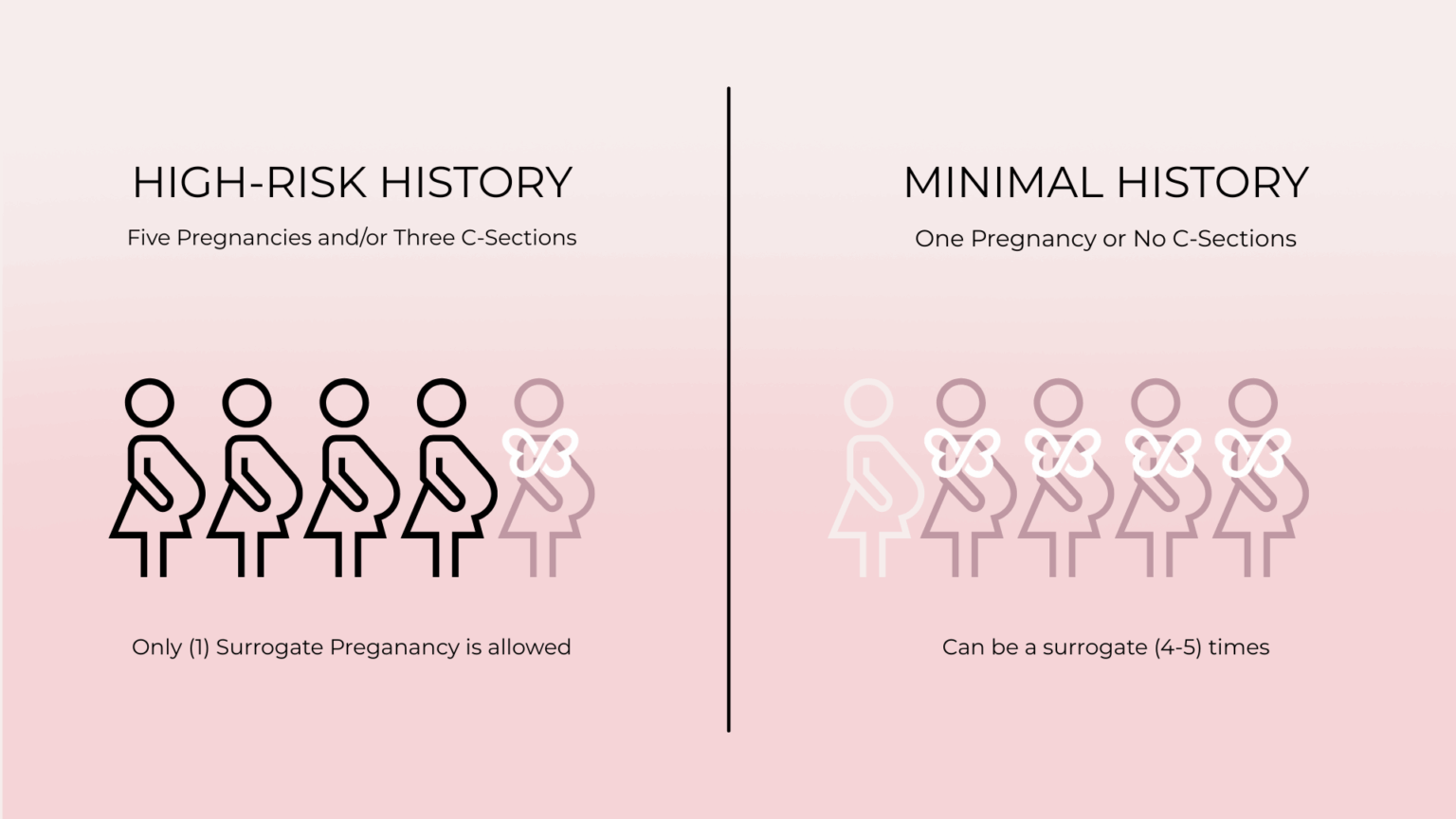
Most agencies and IVF clinics follow medical guidelines based on past births
Past births in the context of pregnancy in general and surrogacy refers to the number of times you have delivered a fetus that has reached a viable gestational age. Although there is no fixed limit, most clinics use general medical guidelines. Surrogates are usually eligible if they have had no more than five previous vaginal births or no more than three previous cesarean births. These guidelines are based on what is safest for your uterus, long-term pelvic health, and future pregnancy outcomes. Why?- The American Society of Reproductive Medicine (ASRM) recommends that ideally, the gestational carrier should not have had more than a total of five previous deliveries or three deliveries via cesarean section as a consideration in selecting a surrogate but not specific to the limit of how many times a surrogate can go on repeat journeys.
- Each cesarean section comes with more risk of health issues related to placenta, scar tissue, incisions (read more about Repeat C-sections: Is there a limit? In the Mayo Clinic article).
- Each pregnancy increases the risk of complications
She explains that if a woman has already had five pregnancies and three C-Sections prior to applying, she could only be a surrogate one time. For women who have minimal history and are potential repeat surrogates, such as one child and no C-sections, the opportunity to be a repeat surrogate is significant with the potential to carry four to five times in total, provided all her previous pregnancies were uncomplicated.
Your ability to continue depends on OB clearance.
Even if you fall within the number range of recommended births, your OB will evaluate details and consider specifics like postpartum recovery, your pregnancy history, and any complications you may have experienced. If your doctor determines that your body is healthy and ready, you may be able to move forward with your surrogacy journey.
Read the full list of qualifications and screening steps here.
Experienced Surrogate Compensation: Why It Is Usually Higher
Experienced surrogate is a surrogate with more than one surrogacy pregnancies.
According to Jeff Hu, Founder of SurrogateFirst, Repeat surrogates can command a 20% premium over first time surrogates because of their experience and familiarity with the process. They are often more sought after because of the following:
- They understand the journey and therefore have less potential conflicts with the IP’s and the overall process,
- They have been pregnant via IVF process which is another positive sign that physically they have been successful in carrying via IVF successfully.
Second-time surrogate compensation
Second-time surrogate compensation is generally higher than first-time compensation.
Your first journey establishes a proven track record of healthy pregnancy and commitment. That experience is valuable.
Why Experience Increases Compensation
When you become a surrogate again:
IVF clinics and intended parents already know your body responds well to pregnancy.
You understand the process, appointments, medication, and emotional timeline.
Your experience often results in smoother communication and fewer unknowns.
Repeating surrogate journey with the same surrogate
This reduces stress for intended parents and agencies, which is why compensation increases. Your knowledge and history bring both stability and reassurance to the journey.
First-Time vs Repeat Surrogate Compensation in 2025
/
1st time Surrogate
Repeat Surrogate
Low Estimate
US $55,000
1st time Surrogate
US $65,000
Repeat Surrogate
High Estimate
US $70,000
1st time Surrogate
US $85,000
Repeat Surrogate
Why?
First-time surrogates receive standard base compensation based on state, insurance, and personal qualifications. At this stage, your history has been with your own pregnancies but not yet surrogacy.
Second-time surrogates have proven successful experience and reliability. Life experience as a surrogate is important to Intended parents, who tend to prefer experienced surrogates, which increases demand and compensation.
Third-Time+ Surrogacy Compensation: Does It Continue to Increase?
Yes, compensation can continue to rise for third-time and repeat surrogates, but usually at a gradual rate. The main factors include:
- Your previous pregnancy outcomes
- Your recovery and delivery history
- Your age and overall health
- The preferences of intended parents and clinics
Repeat surrogates are often requested specifically by intended parents because experience reduces uncertainty. Your confidence and clarity in the process also support a smoother journey.
However, the priority is always your safety, so your OB and IVF doctor will guide you based on medical readiness.

"Repeat surrogates will seek higher compensation on their next journey mainly because the demand of surrogates change over time and usually surrogates are in high demand and over time compensation increases every year.”
Jeff Hu, Owner SurrogateFirst
Furthermore, Jeff Hu (Founder, SurrogateFirst) added that Repeat surrogates will seek higher compensation on their next journey mainly because the demand of surrogates change over time and usually surrogates are in high demand and over time compensation increases every year. Surrogates have to wait on average 6-12 months so the next time they review compensation for the next journey will be around 1.5-2 years later. Between 2019 and 2023 increased by 11%, however in 2023 surrogate expectations rose by 22% to $60K on average. In 2024 and beyond we see compensation increasing steadily.
See Section 5 of the Future Trends in Surrogacy Report of 2024 for more details.
Surrogate Stories: Why Some Surrogates Choose to Carry Again
“I have decided to do another surrogacy journey because of the way I felt when I finished my first journey. It's a feeling hard to explain, it’s like an accomplishment and feeling like I was the greatest opportunity for a family to grow. Also my oldest daughter asked me if it was possible to help another family grow. The joy that my heart feels when I hear thank you for making my dream come true is just something hard to explain, but incredible to feel.”
Ninoshka, Experienced Surrogate

Women we work with describe surrogacy as a deeply meaningful experience. For those who feel emotionally connected to the process and physically comfortable during pregnancy, the desire to help another family can feel natural.
The State of Surrogacy report, a survey conducted by SurrogateFirst in 2023, confirms just how deeply rewarding the experience is. A remarkable 8 out of 10 surrogates reported feeling “satisfied” or “very satisfied” with their overall journey. Even more telling is their willingness to do it all again, with a large majority, 83% of surrogates, stating they would consider becoming a repeat surrogate.
Some second-time and third-time surrogates at SurrogateFirst share that:
- They found fulfillment in making parenthood possible for others.
- Their previous journey was positive and well supported.
- They felt proud of their emotional and physical strength.
- Their relationship with intended parents was meaningful and encouraging.
Surrogacy is not only about pregnancy. It is about empathy, intention, and shared joy.
Benefits of Being an Experienced Surrogate
1. Higher Compensation and Better Financial Stability
Repeat surrogates receive higher compensation because their experience brings additional value. This allows you to better support personal financial goals, family needs, or savings plans. Your time and care are respected and compensated accordingly.
2. Meaningful Emotional Fulfillment
Helping create a family is profound. Many surrogates describe the joy of seeing intended parents hold their child for the first time as indescribable. Choosing to do that again often comes from a place of emotional generosity and purpose.
3. Established Trust and Familiarity
If you work with the same intended family again, there is already comfort and connection. Even when matched with a new family, your experience makes communication easier and helps set clear expectations. You move through the journey with confidence.
4. Confidence and Reduced Uncertainty
You understand what the journey requires. You know how medication cycles feel, how milestones unfold, and how to balance self-care throughout pregnancy. With confidence comes calm, and that benefits everyone.
Benefits of Repeat Surrogate Journeys with SurrogateFirst


At SurrogateFirst, we honor the dedication and heart of repeat surrogates.
Competitive, Transparent Compensation
Repeat surrogates receive elevated compensation that reflects their experience and commitment. We ensure all payments are clear, timely, and well-explained.
Surrogate Wellness Program
Your health is supported before, during, and after pregnancy. We provide ongoing guidance, community support, and access to wellness resources.
Discover the SurrogateFirst Wellness Program here.
Surrogate Wellness Cruise Program
Our signature celebration experience brings surrogates together on a restorative cruise. It is a space for connection, healing, joy, and sisterhood with women who share the same journey and heart.
Final Thoughts
There is no one-size-fits-all limit to how many times you can be a surrogate. What matters is:
- Your physical health
- Emotional readiness
- Proper medical clearance
- Your personal sense of purpose
If you are considering becoming a surrogate again or beginning your first journey, our team at SurrogateFirst is here to guide you with clarity, compassion, and respect.
Why SurrogateFirst?
At SurrogateFirst, we’re more than a matching agency—we’re your support system.
- Compassionate, personalized matching
- 24/7 access to dedicated case managers
- Legal and medical coordination
- Transparent pricing
- Emotional support for surrogates and for intended parents alike