
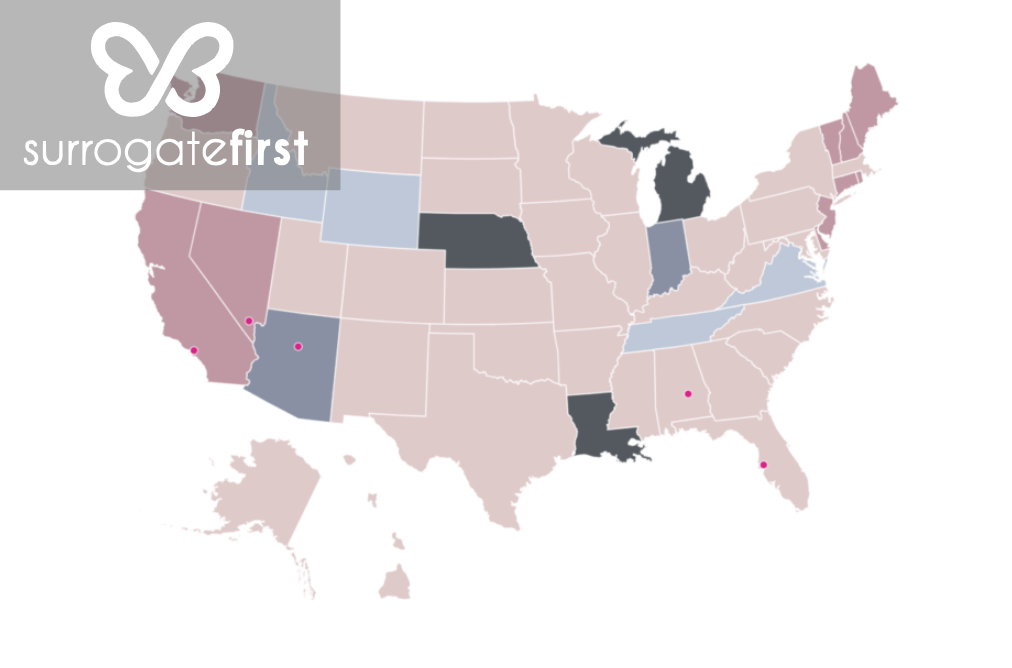
Surrogacy law is primarily determined at the state level. Commercial Surrogacy, also known as compensated surrogacy, is permitted in many US states, including (but not limited to) California, Colorado and Nevada. However, navigating surrogacy law in the US can still be complex because the rules and legal procedures differ and may change over time.
Surrogacy laws vary from state to state and, in some cases, even within the states. They also depend on the type of surrogacy concerned.
This guide breaks down surrogacy legality across the United States as of 2026, helping you understand where surrogacy is fully legal, conditionally permitted, unclear, complex, or prohibited.
1. Surrogacy-Friendly States: Key States Where Surrogacy is Legal
Surrogacy-friendly states generally have clear laws or well-established legal procedures for gestational surrogacy. The surrogacy process is smooth and accessible for both intended parents and surrogates.
- This can mean a more predictable process for contracts, compensation, parentage, and birth certificate procedures.
- Pre-birth orders are granted throughout these states, ensuring that both intended parents are named on the birth certificate.
- Many of these states allow commercial, gestational surrogacy, while others may also allow altruistic arrangements.
A state may allow gestational surrogacy while placing additional requirements on parentage or the agreements. Another state may have no specific surrogacy law in place but still have an established legal process through courts and case law.
Here are the top surrogacy-friendly states:
- Surrogacy in California (CA): Both commercial and altruistic gestational surrogacy are legal. California has clear laws governing surrogacy agreements and parentage, making it one of the most surrogacy-friendly states in the United States.
- Surrogacy in Colorado (CO): Both commercial and altruistic gestational surrogacy are legal. Under the Colorado Surrogacy Agreement Act, a surrogacy agreement may include compensation, support and reasonable expenses, while uncompensated journeys are also permitted.
- Surrogacy in Connecticut (CT): Both compensated and altruistic gestational surrogacy agreements are permitted and enforceable when legal requirements are met. Connecticut law also allows a surrogacy agreement to provide reasonable compensation and reimbursement of expenses.
- Surrogacy in New Jersey (NJ): Gestational Surrogacy is legal under the New Jersey Gestational Carrier Agreement Act. Altruistic arrangements are permitted, while payments to a gestational carrier are limited to reasonable pregnancy-related and living expenses under the law.
- Surrogacy in Illinois (IL): Both compensated and altruistic surrogacy are legal. The Illinois Gestational Surrogacy Act (IGSA) provides clear rules for enforceable agreements and allows reasonable compensation for a gestational surrogate. With critical updates in 2026, the IGSA enables parentage through administrative procedure instead of a court based route under specific conditions.
- Surrogacy in Massachusetts (MA): Surrogacy had already been recognized through case law, but the Massachusetts Parentage Act created a clear statewide legal framework beginning January 1, 2025. Both commercial and altruistic arrangements are permitted, and compliant agreements can establish intended parent rights before birth.
- Surrogacy in Michigan (MI): Michigan significantly changed its surrogacy laws in 2025. Since April 1, 2025, commercial surrogacy agreements that meet the requirements may include compensation, support and reasonable expenses, while also permitting altruistic arrangements.
- Surrogacy in Nevada (NV): is also known for clear surrogacy statutes, established surrogacy laws and legal protections that help define the rights and responsibilities of both surrogates and intended parents.
- As well as: Washington (DC), Delaware (DE), Vermont (VT), Maine, New Hampshire (NH).
In these states, intended parents can confidently proceed with the surrogacy process knowing their legal rights are protected.
2. Surrogacy-Friendly States: Where Surrogacy is Legal With Conditions
On the other hand, in some states, surrogacy is legal but comes with specific conditions. These conditions may include requirements related to the marital status or residency of the intended parents or surrogate. Additionally, whether a parentage order is issued pre-birth or post-birth can depend on the state or even the specific county.
- Surrogacy in New York (NY): Under current law, the residency rule works more like an either/or requirement: the surrogate must have lived in New York for at least six months if neither intended parent has, and at least one intended parent must have lived in New York for at least six months if the surrogate has not. The surrogate must also be a U.S. citizen or lawful permanent resident, and at least one intended parent must be a U.S. citizen or lawful permanent resident.
- Surrogacy in Rhode Island (RI): An enforceable gestational carrier agreement requires at least one intended parent to be a resident of the United States. Rhode Island also allows compensation when negotiated in good faith One of the intended parents must be a U.S. resident.
- Surrogacy in Wyoming (WY): For a gestational agreement under Wyoming’s statutory framework, both intended parents must have been Wyoming residents for at least one year before the agreement.
- Surrogacy in Florida (FL): Gestational surrogacy is legal but subject to specific eligibility requirements. The commissioning couple must be legally married, and as of July 1, 2026, additional citizenship and residency restrictions apply to parties from designated foreign countries of concern. Learn more about Florida Surrogacy Foreign Ban.
In some cases, non-genetic parents may need to go through post-birth adoption procedures to secure their parental rights and be listed on the birth certificate. Intended parents in these states should consult a reproductive attorney to navigate these conditions.
3. Surrogacy-Friendly States: Where Surrogacy Laws Are Unclear
Certain states have ambiguous or inconsistent surrogacy laws. While surrogacy is practiced in these areas, legal hurdles may arise, and the outcome can depend on local courts or specific circumstances.
- Surrogacy in Pennsylvania (PA): has no state law that specifically permits or prohibits surrogacy. Surrogacy is practiced based on existing court decisions, and procedures can vary depending on the county and judge.
- Surrogacy in Ohio (OH): permits gestational surrogacy through established case law, but there is no specific surrogacy statute that addresses every part of the process. For example, state law does not clearly define whether every surrogacy agreement is enforceable.
- Surrogacy in South Carolina (SC): allows the practice of gestational surrogacy even though the state does not have a specific statute regulating it. Existing case law suggests that gestational surrogacy agreements may be recognized, but individual circumstances can still affect the legal process.
4. Proceed with Caution: States Where Surrogacy Laws Are Complex
- Surrogacy in Tennessee (TN): Both commercial and altruistic gestational surrogacy are permitted because Tennessee law does NOT specifically prohibit either type. However, Tennessee does not have detailed laws governing surrogacy agreements, and that parentage procedures can depend on the genetic relationship of the intended parents and the child.
- Surrogacy in Virginia (VA): Surrogacy in Virginia is legal but highly regulated. The state allows altruistic surrogacy arrangements with reimbursements for certain medical and pregnancy – related expenses, but base compensation for a surrogate is not permitted. Surrogacy agreements must also meet specific legal requirements to be enforceable.
Additionally, there are states where surrogacy contracts are void and unenforceable by statute, even though surrogacy arrangements are practiced:
- Surrogacy in Arizona (AZ): Gestational surrogacy is practiced in Arizona, but surrogacy contracts are unenforceable under the state law. This applies to both commercial and altruistic surrogacy contracts, with commercial surrogacy carrying additional legal restrictions.
- Surrogacy in Indiana (IN): Surrogacy itself is not illegal in Indiana and commercial surrogacy is not specifically prohibited. However, both commercial and altruistic surrogacy agreements are considered void and unenforceable under state law.
If you are considering surrogacy in one of these states, it’s crucial to work with a knowledgeable reproductive lawyer who understands how to navigate these legal challenges.
5. Proceed with Extreme Caution: Where is Surrogacy Illegal in the United States?
There is no simple list of states where all forms of surrogacy are completely illegal. In most cases, state laws restrict certain types of surrogacy agreements rather than banning surrogacy altogether.
- Surrogacy in Louisiana (LA): Allows surrogacy only under strict conditions. Commercial gestational surrogacy agreements are not permitted, and agreements that do not meet the state’s requirements are considered null and unenforceable.
- Surrogacy in Nebraska (NE): State law makes compensated surrogate parenthood contracts void and unenforceable. This means compensated surrogacy agreements do not receive the same legal protection as they would in surrogacy-friendly states.
What to Do If You Don’t Live in a Surrogacy-Friendly State?
For intended parents living in states with surrogacy restrictions, there are options, such as:
- Working with surrogates from surrogacy-friendly states. Many surrogacy agencies specialize in matching intended parents with surrogates in states where the process is fully legal. SurrogateFirst provides such service.
- Surrogacy law in the US can be complicated, which is why enlisting the help of a reproductive lawyer is essential. These legal professionals ensure that the surrogacy process complies with state-specific laws and helps protect the rights of all parties involved. You can find the recommended surrogacy practitioners by clicking on each state.
US Surrogacy Takeaways
Surrogacy law in the US is constantly evolving, and understanding the legal landscape is crucial for a successful surrogacy journey.
Whether you live in a state where surrogacy is fully legal, legal with conditions, or prohibited, there are pathways to grow your family or support others in their parenthood dreams. If you are not sure how to navigate those, you might want to seek the help of experienced professionals, so you can meet these complexities with confidence. Feel free to reach out to SurrogateFirst if you need any support in starting your journey.
come and find us on social media:
US Surrogacy FAQs
Where is commercial surrogacy legal in the states in 2026?
Commercial Surrogacy, also known as compensated surrogacy, is permitted in many US states, including California, Colorado and Nevada. However, navigating surrogacy law in the US can still be complex because the rules and legal procedures differ and may change over time.
Navigate through the map on surrogacy laws by state to learn more.
Where is same sex surrogacy legal in the states?
Surrogacy is available to same-sex intended parents in many US States, although parentage procedures and additional legal steps may vary. Here are States embracing compensated gestational surrogacy for gay couples:
- California
- Colorado
- Connecticut
- Delaware
- Illinois
- Maine
- Massachusetts
- Nevada
- New Hampshire
- New York
- North Dakota
- Oregon
- Rhode Island
- Vermont
These states have paved the way in recognizing and supporting gay surrogacy, offering a more straightforward legal process.
Learn more: Gay Surrogacy Guide: LGBTQ+ Intended Parents – SurrogateFirst
What is domestic surrogacy?
Domestic surrogacy is a surrogacy arrangement where intended parents and the surrogate live in the same country. And because both the surrogate and intended parents are subject to the same country’s medical and legal systems, the process may be easier and simpler to coordinate compared to international surrogacy. The process of international surrogacy in the United States though, is widespread and well organized.
Which US states have the most favorable surrogacy laws?
California is widely considered the most surrogacy friendly state, with well-established processes and strong legal protections in place. Other states with favorable surrogacy laws include Nevada, New Jersey, and Washington. It is important to keep in mind that surrogacy laws per state continue to evolve and may vary overt time. Working with an experienced surrogacy attorney and agency will help in navigating through these changes.
How does surrogacy work in the US?
Surrogacy in the US follows the usual process that starts with matching intended parents with a qualified surrogate followed by required medical and psychological screening process and completion of legal contracts before IVF and the pregnancy itself. Surrogacy laws vary by state, so working with experienced legal and medical professionals is essential.
Why SurrogateFirst?
At SurrogateFirst, we’re more than a matching agency—we’re your support system.
- Compassionate, personalized matching
- 24/7 access to dedicated case managers
- Legal and medical coordination
- Transparent pricing
- Emotional support for surrogates and for intended parents alike